
Research
A networking day for everyone doing sepsis research in the Netherlands: get to know each other's cohorts, data and expertise, and find partners for new studies.
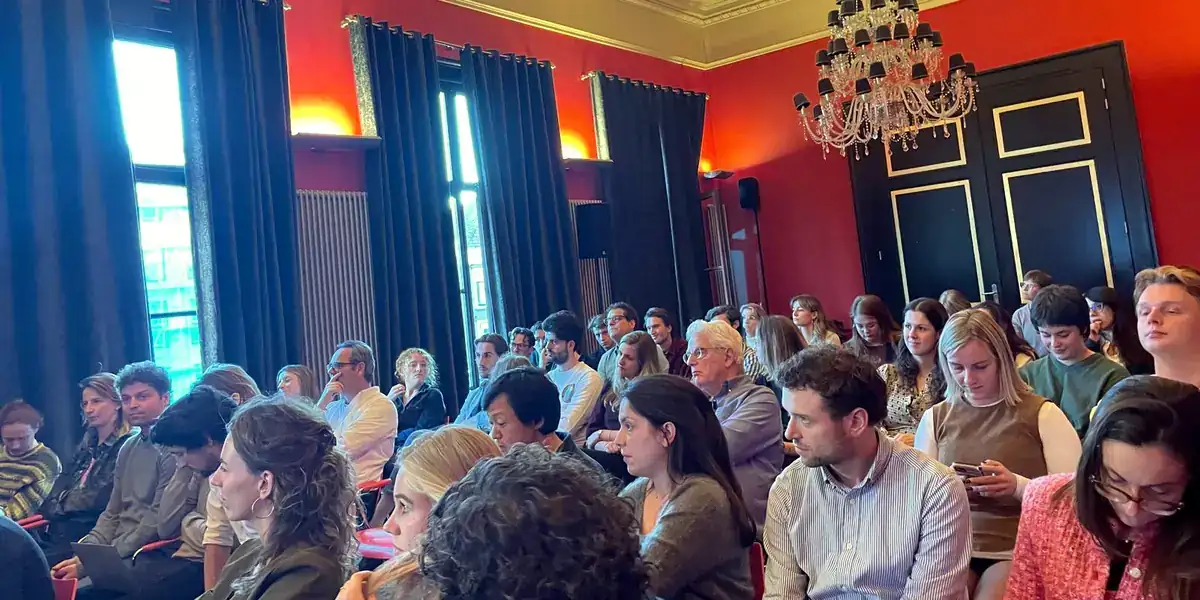
About the day
Sepsis research in the Netherlands is spread across university medical centres, general hospitals, primary care, laboratories and research institutes. The Science Day brings these groups together, so it becomes clear who has which cohorts, biobanks, data and expertise.
In one day you see which studies, cohorts and infrastructure are running in the Netherlands.
Meetings lead to shared validation studies and joint grant applications, without formal obligations.
Participants stay in touch through the research network and the newsletter.
SepsisNet has organised the Science Day since 2022. Since 2026 the focus is on networking: less broadcasting, more meeting.
Format
The programme follows the patient journey: from recognition and triage, through subtypes and targeted treatment, to resuscitation and aftercare. Each edition chooses its own themes and speakers within that framework.
Two or three speakers per theme give a short talk, followed by discussion with the audience.
Flash talks of a few minutes about a project, cohort or infrastructure. Some slots are filled from submitted abstracts.
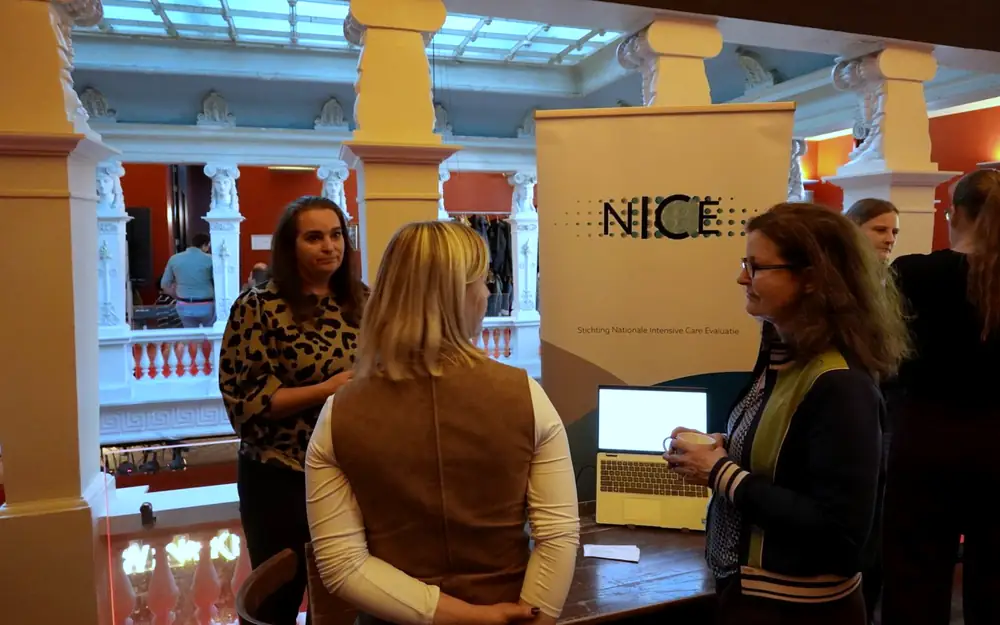
An ongoing poster and stand market during the breaks, the networking lunch and the drinks.
Every contribution ends with one slide: what can I offer and what am I looking for? This shows straight away where collaboration is possible.
Accreditation for medical specialists is requested for each edition.
Taking part
The day is open to everyone interested in sepsis research: researchers, clinicians, nurses, PhD candidates, residents, data and laboratory specialists, and partners from industry and government. Membership of a professional society is not required. PhD candidates and residents pay a reduced fee.
The date of the next Science Day has not yet been set. The announcement, call for abstracts and registration will appear in the calendar and the newsletter.
Looking back 2026
On 5 November 2026, more than 80 researchers, clinicians and partners came together at the Winkel van Sinkel in Utrecht for the annual SepsisNet Science Day. Four themes were central: recognition, subtypes and targeted therapy, antimicrobial and haemodynamic resuscitation, and post-sepsis care. Below is a selection of the highlights, with sources.
Feike Loots showed that many patients with sepsis are in contact with primary care before admission, and that unrecognised infection is associated with higher mortality Loots, BMJ Open 2018. During out-of-hours home visits, GPs counted the respiratory rate in 25% of patients; estimation missed many elevated respiratory rates Loots, BJGP Open 2022. A simple sepsis score for general practice is now being tested in a stepped-wedge study in six regions.
Olaf Cremer, Joost Wiersinga and Matthijs Kox discussed the shift from a single disease entity to biologically defined subtypes. Despite hundreds of immunomodulation trials, the guideline still contains no targeted host-directed therapy Slim, Crit Care 2024. New consensus frameworks describe transcriptomic and immunological subtypes across large cohorts Scicluna, Nat Med 2025 Moore, Nat Med 2025. In ImmunoSep, more than half of the screened patients could not be classified using ferritin and HLA-DR ImmunoSep, JAMA 2025. Examples of biomarker-guided enrichment are ASTONISH with sTREM-1 François, Lancet Respir Med 2023 and an IFN-γ-driven endotype Giamarellos-Bourboulis, EBioMedicine 2024.
Geert Groeneveld discussed the role of oral antibiotics and pharmacokinetics in severe infections. Jan Bakker and Sanne ter Horst put 25 years of resuscitation trials into perspective Hernandez, Crit Care 2026. ARISE FLUIDS showed no difference between early vasopressors and more liberal fluids, but less pulmonary oedema with less fluid ARISE FLUIDS, NEJM 2026. Resuscitation guided by capillary refill time was further supported in ANDROMEDA-SHOCK-2 ANDROMEDA-SHOCK-2, JAMA 2025. In Groningen, the FLUIDS trial is investigating individualised fluid administration in the emergency department ter Horst, PLoS One 2025.
Lonneke van Vught and Wouter van der Heijden showed the scale of long-term consequences: many survivors receive a new diagnosis or become care-dependent Fleischmann-Struzek, JAMA Netw Open 2021, cardiovascular risk is increased Jentzer, J Am Heart Assoc 2023 and readmissions are often infection-related Prescott, JAMA 2015. A definition of post-sepsis syndrome helps to organise follow-up care in a targeted way van der Slikke, Infect Drug Resist 2023.
Early-career researchers presented ongoing work, including long-term sepsis outcomes in Acutelines and MARS, a prediction model for blood culture results, point-of-care HLA-DR measurement and diagnostic discordance in the emergency department. These results have not yet been published.
Thank you to all speakers and participants. The date of the next Science Day has not yet been set; sign up for the newsletter so you do not miss the announcement. Do you do sepsis research yourself? Add your profile to the research network.